
We Run Our Business on Referrals
Fresh Projects is a UK-based software platform designed for architects, engineers, and other built-environment professionals to manage financial aspects of their projects. It helps teams track fees, timesheets, expenses, billing, and overall profitability to keep projects on budget and profitable. The platform also centralises project data, streamlines administrative tasks, and offers mobile app support for easy access and updates.
1a Colinette Road
London
SW15 6QG
© 2026 Fresh Projects
Product
We Run Our Business on Referrals
Fresh Projects is a UK-based software platform designed for architects, engineers, and other built-environment professionals to manage financial aspects of their projects. It helps teams track fees, timesheets, expenses, billing, and overall profitability to keep projects on budget and profitable. The platform also centralises project data, streamlines administrative tasks, and offers mobile app support for easy access and updates.
1a Colinette Road
London
SW15 6QG
© 2026 Fresh Projects
Product
Working Capital Risks in A&E Firms
Working Capital Risks in A&E Firms
Working Capital Risks in A&E Firms
Reading Time:
Reading Time:
5
5
minute(s)
minute(s)

Earlier in my career, I worked in the finance team of a large architecture and engineering firm. We had more than twenty people running accounting and finance functions alone.
Despite that scale, the firms that performed best focused on just three fundamentals:
Winning the right jobs
Making sure project fees covered delivery costs
Invoicing early and collecting debt quickly
This article focuses on the third, because poor cash flow, not lack of work, is what quietly puts pressure on otherwise successful practices.
Why working capital matters more as practices grow
People who owe your practice money are your debtors.
People you owe money to are your creditors.
In reality, there is always a gap between when you issue an invoice and when it gets paid. The longer that gap, the more cash your firm needs in the bank just to keep operating - paying salaries, rent and overheads.
That spare cash is known as working capital.
As practices grow beyond 50 staff, this gap becomes harder to see and harder to manage - particularly because architecture and engineering firms carry a hidden working capital requirement that traditional reports often miss.
The hidden working capital problem in A&E practices
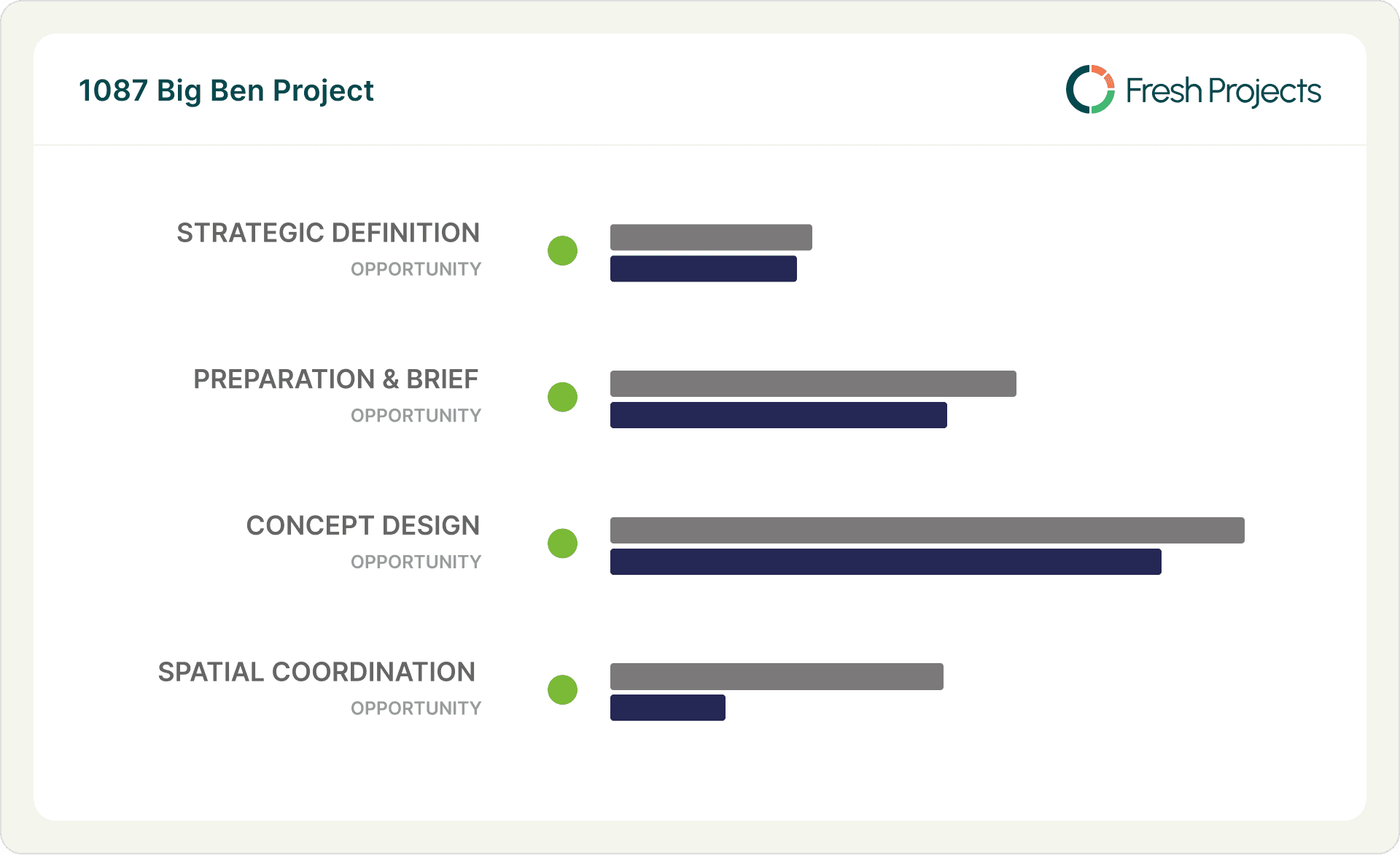
Most accountants can show you your debtor and creditor position easily. But that view alone is incomplete for professional services firms in the built environment.
Why?
Because architects and engineers almost always incur costs before they invoice clients - and sometimes before a fee is even agreed.
There are two main drivers of hidden working capital in larger A&E firms:
1. Bid, competition and risk work
Time and costs spent pursuing work still have to be paid for - regardless of whether the project is won.
2. Milestone-based billing
Most projects are delivered in stages. It can take months to complete a work stage before an invoice can be raised, even though salaries and expenses are incurred weekly.
Unlike businesses that sell physical goods, architecture and engineering firms can’t delay paying staff. People costs are the largest expense - and they must be paid on time.
This makes early invoicing and active debt collection essential, not optional.
How to manage hidden working capital effectively
The key to controlling hidden working capital is visibility.
Every leadership team should be able to answer one simple question:
How much have we spent on work that we haven’t yet been paid for?
Here’s a practical way to manage it.
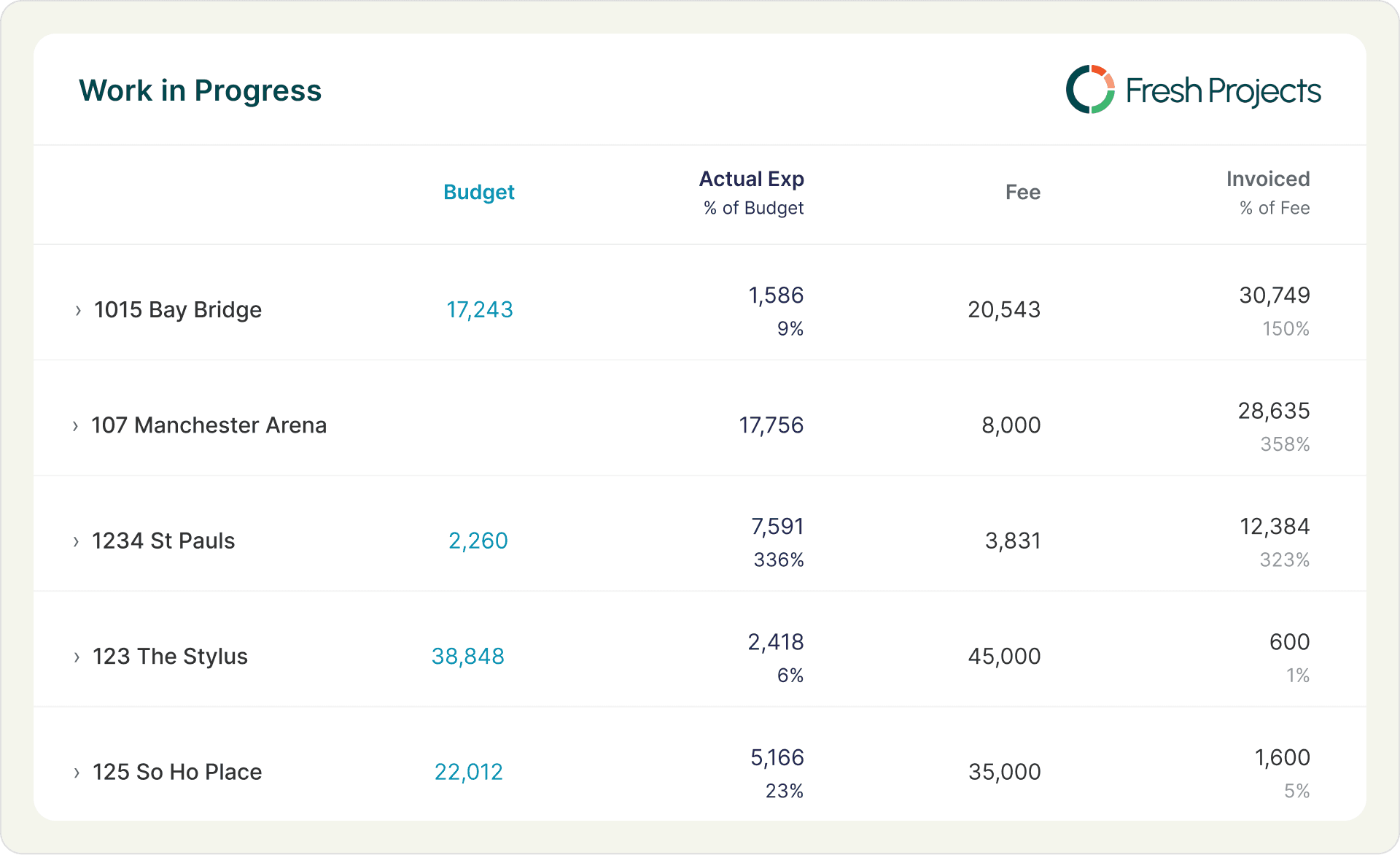
Step 1: Track total spend on every project
This includes:
Live projects
Opportunities
Bids and competitions
If time or costs are being incurred, they should be visible.
Step 2: Track total invoiced value
For each project, record how much has been invoiced to date - even if that number is zero.
Step 3: Calculate uncompensated spend
Subtract invoiced value from total spend.
The result is your hidden working capital tied up in that project.
Leadership teams should agree:
What level of uncompensated spend is acceptable per project
What the acceptable total is across the firm
This figure represents the minimum cash buffer required to keep operating comfortably.
Where leadership attention should focus
On a monthly basis, identify:
The largest uncompensated projects
The fastest-growing uncompensated projects
These are the projects that should be invoiced as soon as possible.
And just as firms occasionally write off bad debt, it can also be sensible to periodically write off hidden working capital on bids or competitions that never materialised.
Ignoring it doesn’t make it go away - it simply hides the risk.
Why unpaid invoices must be taken seriously
Issuing an invoice improves cash flow.
Getting it paid protects the business.
A former colleague of mine worked at an invoice financing company. They would advance up to 95% of an invoice’s value immediately - except in one sector.
Construction.
The levels of non-payment were simply too high.
This makes active credit control especially important for architecture and engineering firms.
Practical ways to improve invoice collection
Empower the whole team
In larger practices, responsibility for unpaid invoices often sits with a single individual. Sharing visibility across project teams can be far more effective.
Use good cop / bad cop
If chasing payment risks damaging a client relationship, using a third party or central finance team can preserve goodwill while still applying pressure.
Stop work on unpaid projects
It may feel uncomfortable, but continuing to work without payment is equivalent to financing the project yourself - unsecured.
Stop taking on repeat work from poor payers
If a client consistently pays late, continuing to accept new projects is a commercial decision - and often a costly one.
Visibility creates focus (and profitability)
Running a 50–100 person architecture or engineering practice comes with no shortage of competing priorities.
The firms that perform best don’t try to manage everything perfectly. They focus relentlessly on the few things that matter most.
By improving visibility over:
Unpaid work
Invoicing delays
Hidden working capital
Leadership teams gain control, protect cash flow and make better decisions, without adding unnecessary complexity.
How Fresh Projects helps
Fresh Projects is designed specifically for architecture and engineering practices.
It connects:
So leadership teams can see where cash is tied up, what needs to be invoiced, and where action is required - without relying on spreadsheets or manual reporting.
Better visibility leads to faster invoicing, stronger cash flow and a more resilient practice.
Earlier in my career, I worked in the finance team of a large architecture and engineering firm. We had more than twenty people running accounting and finance functions alone.
Despite that scale, the firms that performed best focused on just three fundamentals:
Winning the right jobs
Making sure project fees covered delivery costs
Invoicing early and collecting debt quickly
This article focuses on the third, because poor cash flow, not lack of work, is what quietly puts pressure on otherwise successful practices.
Why working capital matters more as practices grow
People who owe your practice money are your debtors.
People you owe money to are your creditors.
In reality, there is always a gap between when you issue an invoice and when it gets paid. The longer that gap, the more cash your firm needs in the bank just to keep operating - paying salaries, rent and overheads.
That spare cash is known as working capital.
As practices grow beyond 50 staff, this gap becomes harder to see and harder to manage - particularly because architecture and engineering firms carry a hidden working capital requirement that traditional reports often miss.
The hidden working capital problem in A&E practices
Most accountants can show you your debtor and creditor position easily. But that view alone is incomplete for professional services firms in the built environment.
Why?
Because architects and engineers almost always incur costs before they invoice clients - and sometimes before a fee is even agreed.
There are two main drivers of hidden working capital in larger A&E firms:
1. Bid, competition and risk work
Time and costs spent pursuing work still have to be paid for - regardless of whether the project is won.
2. Milestone-based billing
Most projects are delivered in stages. It can take months to complete a work stage before an invoice can be raised, even though salaries and expenses are incurred weekly.
Unlike businesses that sell physical goods, architecture and engineering firms can’t delay paying staff. People costs are the largest expense - and they must be paid on time.
This makes early invoicing and active debt collection essential, not optional.
How to manage hidden working capital effectively
The key to controlling hidden working capital is visibility.
Every leadership team should be able to answer one simple question:
How much have we spent on work that we haven’t yet been paid for?
Here’s a practical way to manage it.
Step 1: Track total spend on every project
This includes:
Live projects
Opportunities
Bids and competitions
If time or costs are being incurred, they should be visible.
Step 2: Track total invoiced value
For each project, record how much has been invoiced to date - even if that number is zero.
Step 3: Calculate uncompensated spend
Subtract invoiced value from total spend.
The result is your hidden working capital tied up in that project.
Leadership teams should agree:
What level of uncompensated spend is acceptable per project
What the acceptable total is across the firm
This figure represents the minimum cash buffer required to keep operating comfortably.
Where leadership attention should focus
On a monthly basis, identify:
The largest uncompensated projects
The fastest-growing uncompensated projects
These are the projects that should be invoiced as soon as possible.
And just as firms occasionally write off bad debt, it can also be sensible to periodically write off hidden working capital on bids or competitions that never materialised.
Ignoring it doesn’t make it go away - it simply hides the risk.
Why unpaid invoices must be taken seriously
Issuing an invoice improves cash flow.
Getting it paid protects the business.
A former colleague of mine worked at an invoice financing company. They would advance up to 95% of an invoice’s value immediately - except in one sector.
Construction.
The levels of non-payment were simply too high.
This makes active credit control especially important for architecture and engineering firms.
Practical ways to improve invoice collection
Empower the whole team
In larger practices, responsibility for unpaid invoices often sits with a single individual. Sharing visibility across project teams can be far more effective.
Use good cop / bad cop
If chasing payment risks damaging a client relationship, using a third party or central finance team can preserve goodwill while still applying pressure.
Stop work on unpaid projects
It may feel uncomfortable, but continuing to work without payment is equivalent to financing the project yourself - unsecured.
Stop taking on repeat work from poor payers
If a client consistently pays late, continuing to accept new projects is a commercial decision - and often a costly one.
Visibility creates focus (and profitability)
Running a 50–100 person architecture or engineering practice comes with no shortage of competing priorities.
The firms that perform best don’t try to manage everything perfectly. They focus relentlessly on the few things that matter most.
By improving visibility over:
Unpaid work
Invoicing delays
Hidden working capital
Leadership teams gain control, protect cash flow and make better decisions, without adding unnecessary complexity.
How Fresh Projects helps
Fresh Projects is designed specifically for architecture and engineering practices.
It connects:
So leadership teams can see where cash is tied up, what needs to be invoiced, and where action is required - without relying on spreadsheets or manual reporting.
Better visibility leads to faster invoicing, stronger cash flow and a more resilient practice.
Published:
Published:


Practice Performance Management & Project Information Management: Why Growing AEC Firms Need Both
Practice Performance Management & Project Information Management: Why Growing AEC Firms Need Both
Practice Performance Management & Project Information Management: Why Growing AEC Firms Need Both
Growing architecture and engineering firms need two kinds of visibility: how the practice is performing, and what the project knows. This piece explores why both matter as teams, projects and complexity grow.
Growing architecture and engineering firms need two kinds of visibility: how the practice is performing, and what the project knows. This piece explores why both matter as teams, projects and complexity grow.

Five ways to build commercial confidence across your project teams
Five ways to build commercial confidence across your project teams
Five ways to build commercial confidence across your project teams
How architecture, engineering, quantity surveying and other built-environment firms can help project teams understand fees, time and performance without turning everyone into finance specialists.
How architecture, engineering, quantity surveying and other built-environment firms can help project teams understand fees, time and performance without turning everyone into finance specialists.

Can your project record stand up when it matters? 5 practical tests for AEC firms.
Can your project record stand up when it matters? 5 practical tests for AEC firms.
Can your project record stand up when it matters? 5 practical tests for AEC firms.
Five simple tests to uncover gaps in your project information before they become commercial, compliance or delivery risks.
Five simple tests to uncover gaps in your project information before they become commercial, compliance or delivery risks.

7 Signs Your A&E Practice Management Software Isn’t Fully Adopted
7 Signs Your A&E Practice Management Software Isn’t Fully Adopted
7 Signs Your A&E Practice Management Software Isn’t Fully Adopted
How growing A&E firms can close the gap between software implementation and whole-team commercial value
How growing A&E firms can close the gap between software implementation and whole-team commercial value

When Teams Stop Speaking The Same Operational Language
When Teams Stop Speaking The Same Operational Language
When Teams Stop Speaking The Same Operational Language
Why growing architecture practices often lose reporting confidence gradually, long before anyone formally identifies a systems problem.
Why growing architecture practices often lose reporting confidence gradually, long before anyone formally identifies a systems problem.

What It Really Means When a Client Recommends You
What It Really Means When a Client Recommends You
What It Really Means When a Client Recommends You
Why the built environment has always grown through trust, and what that means for the firms that do it well.
Why the built environment has always grown through trust, and what that means for the firms that do it well.

Why Reporting Leaves Firms Guessing
Why Reporting Leaves Firms Guessing
Why Reporting Leaves Firms Guessing
Inside many built environment firms, meetings meant for decisions quietly turn into debates about the numbers on the page.
Inside many built environment firms, meetings meant for decisions quietly turn into debates about the numbers on the page.

Why Multi-Office Firms Lack Visibility
Why Multi-Office Firms Lack Visibility
Why Multi-Office Firms Lack Visibility
In many built environment consultancies, reporting technically works. The challenge is that clarity often arrives after the moment when it would have influenced action.
In many built environment consultancies, reporting technically works. The challenge is that clarity often arrives after the moment when it would have influenced action.

Why Reporting Slows Firms Down
Why Reporting Slows Firms Down
Why Reporting Slows Firms Down
Even with reporting systems in place, many architecture, engineering and quantity surveying firms find that insight arrives too late to influence decisions during delivery.
Even with reporting systems in place, many architecture, engineering and quantity surveying firms find that insight arrives too late to influence decisions during delivery.

Compare A&E Management Tools
Compare A&E Management Tools
Compare A&E Management Tools
Choosing a practice management system is no longer about feature lists. This guide explains how architecture and engineering firms should compare tools in 2026, focusing on adoption, usability and decision-making rather than complexity.
Choosing a practice management system is no longer about feature lists. This guide explains how architecture and engineering firms should compare tools in 2026, focusing on adoption, usability and decision-making rather than complexity.


Spreadsheets in A&E Firms: What Works
Spreadsheets in A&E Firms: What Works
Spreadsheets in A&E Firms: What Works
A practical guide to using Excel and Sheets well, and knowing when to graduate to purpose-built systems without losing the flexibility you love.
A practical guide to using Excel and Sheets well, and knowing when to graduate to purpose-built systems without losing the flexibility you love.

Women in AEC at Fresh Projects
Women in AEC at Fresh Projects
Women in AEC at Fresh Projects
Why representation, visibility and better systems matter for the future of architecture and engineering
Why representation, visibility and better systems matter for the future of architecture and engineering

Architecture Leadership Challenges
Architecture Leadership Challenges
Architecture Leadership Challenges
How firm leaders can protect margin, prepare successors and modernise delivery without losing what made them successful
How firm leaders can protect margin, prepare successors and modernise delivery without losing what made them successful

5 Ways to Outgrow Spreadsheets Profitably
5 Ways to Outgrow Spreadsheets Profitably
5 Ways to Outgrow Spreadsheets Profitably
How architecture and engineering practices protect margin as teams and project complexity increase
How architecture and engineering practices protect margin as teams and project complexity increase

The Profitability Pyramid Explained
The Profitability Pyramid Explained
The Profitability Pyramid Explained
Understanding the real drivers of financial performance for medium and large practices over the past year
Understanding the real drivers of financial performance for medium and large practices over the past year

3 Lessons to Help You Run a More Profitable Practice
3 Lessons to Help You Run a More Profitable Practice
3 Lessons to Help You Run a More Profitable Practice
Practical insights from A&E leaders on spotting profit risks early, communicating value, and protecting margins
Practical insights from A&E leaders on spotting profit risks early, communicating value, and protecting margins

Embracing Neurodiversity in Architecture
Embracing Neurodiversity in Architecture
Embracing Neurodiversity in Architecture
How inclusive practice design can unlock creativity, innovation and operational clarity
How inclusive practice design can unlock creativity, innovation and operational clarity

Profitable Projects: Winning the Right Projects in AEC
Profitable Projects: Winning the Right Projects in AEC
Profitable Projects: Winning the Right Projects in AEC
How to qualify leads, focus your pipeline and forecast success more confidently
How to qualify leads, focus your pipeline and forecast success more confidently

Profitable Projects: The Art of Cashflow Alchemy in AEC
Profitable Projects: The Art of Cashflow Alchemy in AEC
Profitable Projects: The Art of Cashflow Alchemy in AEC
How architecture and engineering firms can turn unpredictable cash flow into a strategic advantage
How architecture and engineering firms can turn unpredictable cash flow into a strategic advantage

Setting Fees for Profitable Projects
Setting Fees for Profitable Projects
Setting Fees for Profitable Projects
Why bottom-up fee setting, clear scope and real-time cost visibility underpin profitable projects
Why bottom-up fee setting, clear scope and real-time cost visibility underpin profitable projects

Tools That Improve A&E Profitability
Tools That Improve A&E Profitability
Tools That Improve A&E Profitability
Why better visibility across projects, people and finances is now essential for sustainable practice performance
Why better visibility across projects, people and finances is now essential for sustainable practice performance

How to Manage Inflation on Architecture Projects
How to Manage Inflation on Architecture Projects
How to Manage Inflation on Architecture Projects
Practical ways to protect fees and margins when costs change mid-project
Practical ways to protect fees and margins when costs change mid-project

An Architect’s Guide to Project Budgeting
An Architect’s Guide to Project Budgeting
An Architect’s Guide to Project Budgeting
How to build realistic, profitable project budgets that support better pricing and delivery
How to build realistic, profitable project budgets that support better pricing and delivery


Improve Project Profitability: An Architect’s Guide
Improve Project Profitability: An Architect’s Guide
Improve Project Profitability: An Architect’s Guide
Practical ways architecture practices can protect margins and make better commercial decisions
Practical ways architecture practices can protect margins and make better commercial decisions


Calculate Your Cost Rate in 3 Simple Steps
Calculate Your Cost Rate in 3 Simple Steps
Calculate Your Cost Rate in 3 Simple Steps
Why understanding your true cost rate is the foundation of profitable fees, resourcing and decision-making
Why understanding your true cost rate is the foundation of profitable fees, resourcing and decision-making

When to Hire: Key Decisions
When to Hire: Key Decisions
When to Hire: Key Decisions
Why workload visibility and forecasting matter more than instinct in mid-sized architecture practices
Why workload visibility and forecasting matter more than instinct in mid-sized architecture practices

5 Basics to Improve Profitability
5 Basics to Improve Profitability
5 Basics to Improve Profitability
Five practical habits that help architecture practices improve profitability without adding complexity
Five practical habits that help architecture practices improve profitability without adding complexity

3 Questions for Profitable Firms
3 Questions for Profitable Firms
3 Questions for Profitable Firms
How clear insight into projects, clients and utilisation drives better decisions in mid-sized A&E firms
How clear insight into projects, clients and utilisation drives better decisions in mid-sized A&E firms

What Makes Firms More Profitable?
What Makes Firms More Profitable?
What Makes Firms More Profitable?
Why the most profitable firms spend less time on financial management and still make better decisions
Why the most profitable firms spend less time on financial management and still make better decisions

A-Team Approach to Profitability
A-Team Approach to Profitability
A-Team Approach to Profitability
Why reallocating work across roles can dramatically improve utilisation and margins in 50–100 person A&E practices
Why reallocating work across roles can dramatically improve utilisation and margins in 50–100 person A&E practices

I Love Excel. I Hate Excel.
I Love Excel. I Hate Excel.
I Love Excel. I Hate Excel.
Why spreadsheets break down in 50–100 person architecture and engineering practices, and what works better
Why spreadsheets break down in 50–100 person architecture and engineering practices, and what works better

Getting Project Fees Right
Getting Project Fees Right
Getting Project Fees Right
How accurate budgeting and disciplined scope control protect profitability in 50–100 person A&E practices
How accurate budgeting and disciplined scope control protect profitability in 50–100 person A&E practices
Working Capital Risks in A&E Firms
Working Capital Risks in A&E Firms
Working Capital Risks in A&E Firms
The financial blind spot that catches even well-run architecture and engineering practices
The financial blind spot that catches even well-run architecture and engineering practices

We Run Our Business on Referrals
Fresh Projects is a UK-based software platform designed for architects, engineers, and other built-environment professionals to manage financial aspects of their projects. It helps teams track fees, timesheets, expenses, billing, and overall profitability to keep projects on budget and profitable. The platform also centralises project data, streamlines administrative tasks, and offers mobile app support for easy access and updates.
1a Colinette Road
London
SW15 6QG
© 2026 Fresh Projects
Product
