
We Run Our Business on Referrals
Fresh Projects is a UK-based software platform designed for architects, engineers, and other built-environment professionals to manage financial aspects of their projects. It helps teams track fees, timesheets, expenses, billing, and overall profitability to keep projects on budget and profitable. The platform also centralises project data, streamlines administrative tasks, and offers mobile app support for easy access and updates.
1a Colinette Road
London
SW15 6QG
© 2026 Fresh Projects
Product
We Run Our Business on Referrals
Fresh Projects is a UK-based software platform designed for architects, engineers, and other built-environment professionals to manage financial aspects of their projects. It helps teams track fees, timesheets, expenses, billing, and overall profitability to keep projects on budget and profitable. The platform also centralises project data, streamlines administrative tasks, and offers mobile app support for easy access and updates.
1a Colinette Road
London
SW15 6QG
© 2026 Fresh Projects
Product
Getting Project Fees Right
Getting Project Fees Right
Getting Project Fees Right
Reading Time:
Reading Time:
5
5
minute(s)
minute(s)

Earlier in my career, I worked in the finance team of a large architecture and engineering firm. We had more than twenty people running accounting functions alone.
Despite that scale, the firms that performed best focused on just three fundamentals:
Winning the right jobs
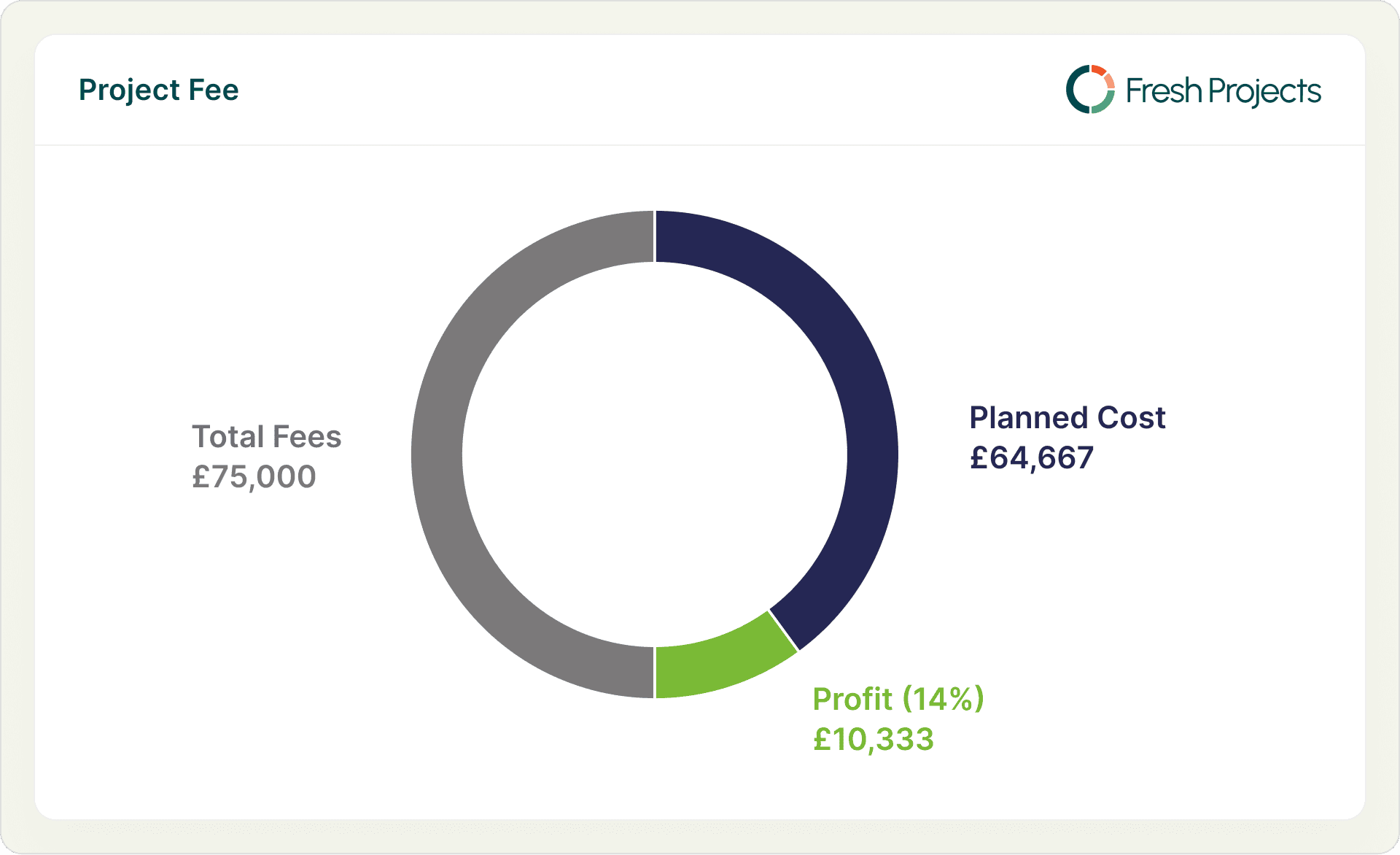
Making sure project fees covered delivery costs
Invoicing early and collecting debt quickly
This article focuses on the second, because even well-run practices quietly lose profit when fees are set without sufficient rigour or scope changes go unmanaged.
Why getting project fees right becomes harder as firms grow
In 50–100 person architecture and engineering practices, fee pressure increases as projects become more complex, teams grow larger and delivery spans multiple stages and offices.
Two issues consistently undermine profitability:
Underestimating the true cost of delivery
Failing to charge for scope changes
Neither is caused by bad intent. Architects and engineers are problem-solvers by nature. We would rather move on to design work than pause to revisit budgets or challenge scope creep.
But profitability improves dramatically when firms build consistent habits around project budgeting and scope control.
What a profitable project fee actually requires
There are only two areas that truly matter when setting fees in an architecture or engineering practice:
1. Accurate project budgeting
At a minimum, you must understand what a project will cost to deliver and ensure the fee exceeds that cost.
2. Disciplined scope tracking
Scope creep is the single biggest eroder of profit in built environment professional services firms.
Getting either wrong can turn a busy practice into an unprofitable one.
Bottom-up costing: the foundation of profitable fees
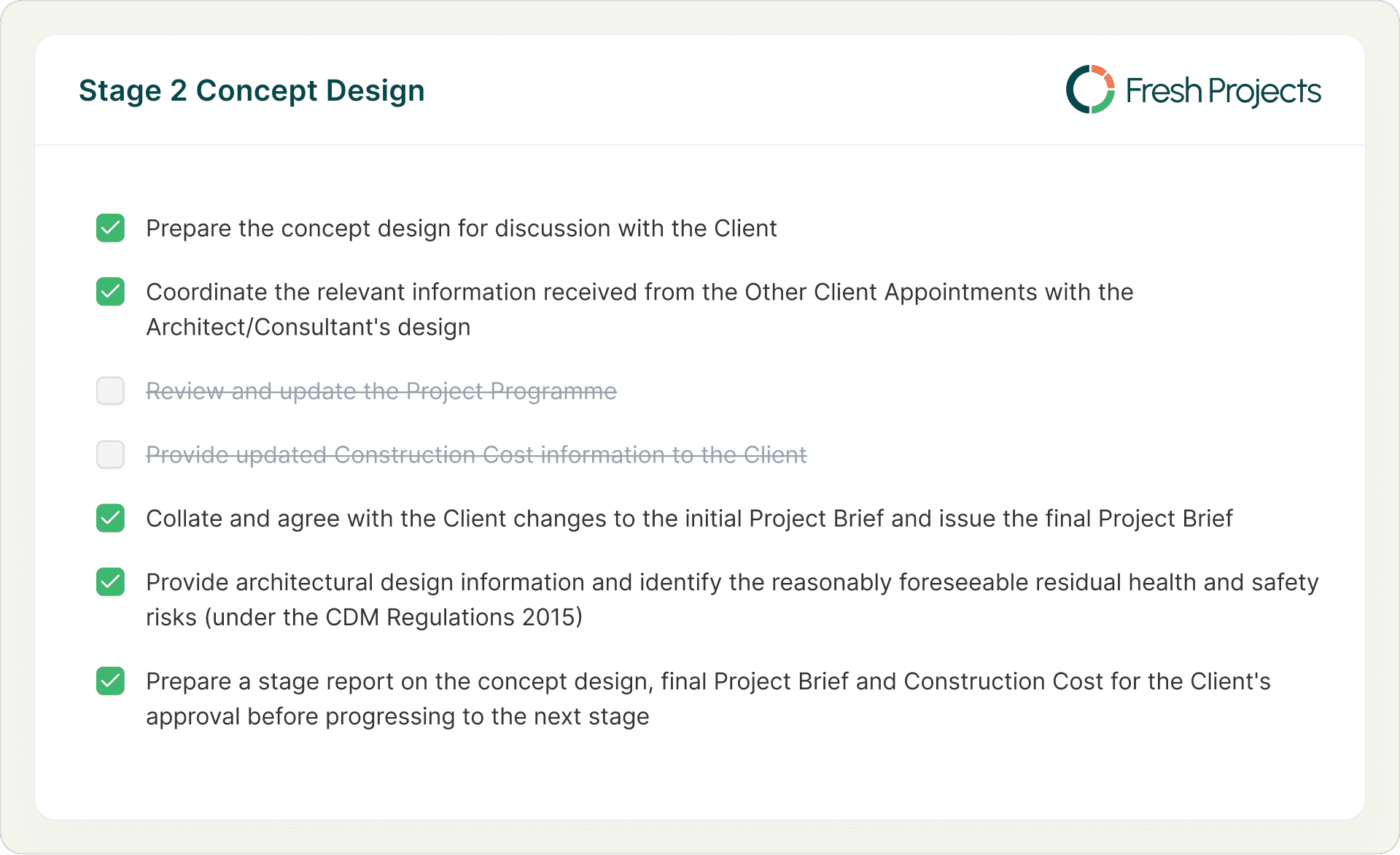
Before accepting any project, firms should run a structured go / no-go process that includes scope definition and cost budgeting.
A practical approach looks like this.
Step 1: Understand the value you’re providing
Start by clarifying the problem you are solving for the client and the value you create. Where possible, quantify that value in financial terms.
This anchors the fee discussion in outcomes, not just hours.
Step 2: Define the scope of services clearly
Be explicit about what is included and just as importantly, what is excluded.
Many practices use a standard services checklist as a starting point, such as the RIBA Standard Services, adapting it to suit different project types.
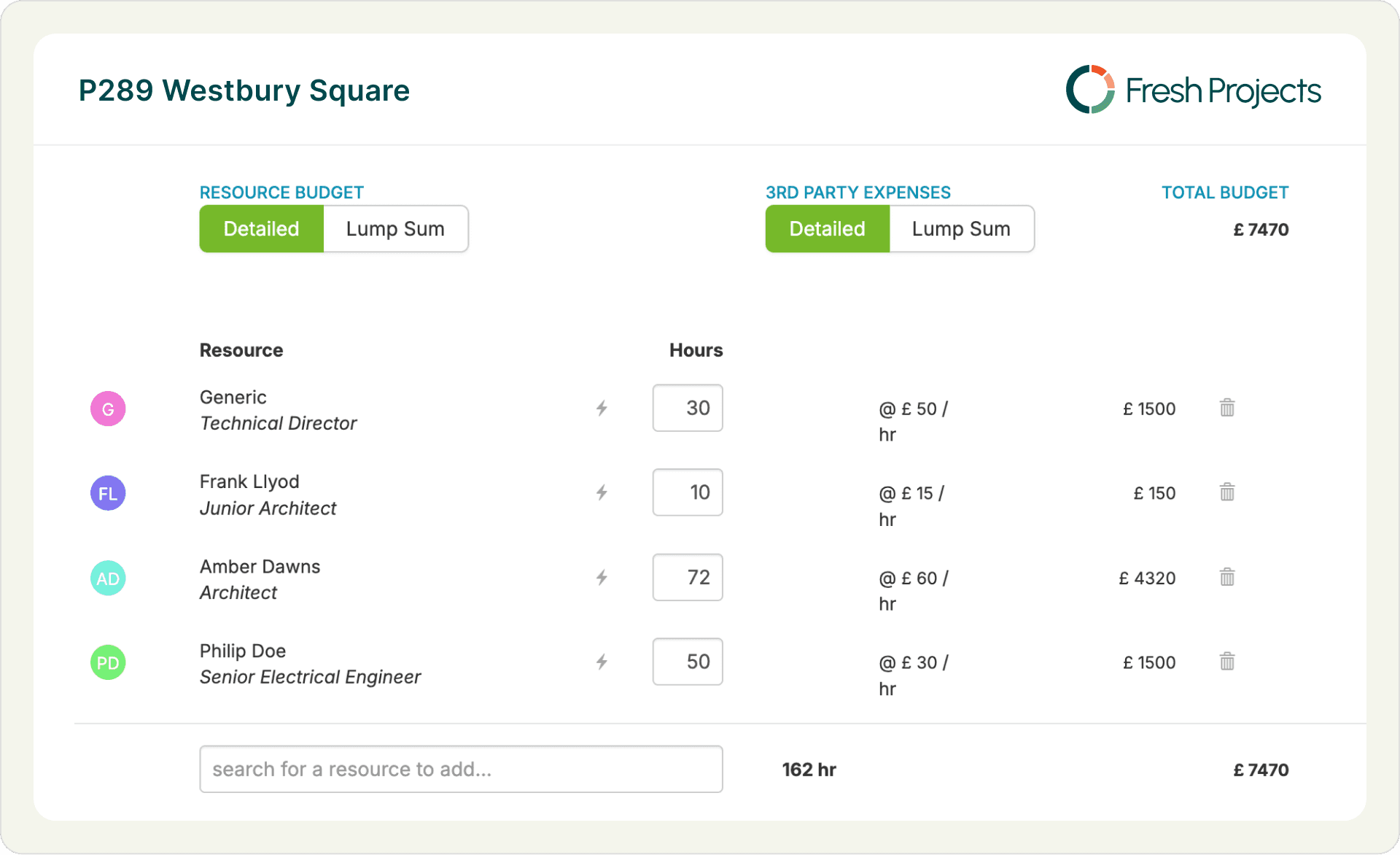
Step 3: Estimate the true cost of delivery
This should include:
Labour costs:
Estimated hours per role multiplied by fully loaded cost rates, including overheads and non-productive timeOther costs:
Sub-consultants, travel, printing, surveys and specialist inputs
If delivery costs exceed the perceived value, the project should be reconsidered. These are often the jobs where clients feel overcharged and teams feel underpaid.
Step 4: Set a fee that covers costs, at a minimum
Profit should not be accidental. If a fee does not comfortably cover delivery costs, risk is being accepted knowingly.
Step 5: Sense-check the fee
Compare your proposed fee against:
Total construction cost benchmarks
Previous similar projects, and whether they were actually profitable
The value-add identified earlier
Industry averages can be helpful, but they should never replace firm-specific insight.
Step 6: Adjust scope, not price
If the client pushes back on fees, revisit scope. Removing services is far safer than discounting and hoping delivery comes in under budget.
Why scope creep destroys profitability during delivery
Across tens of thousands of projects, a consistent pattern emerges:
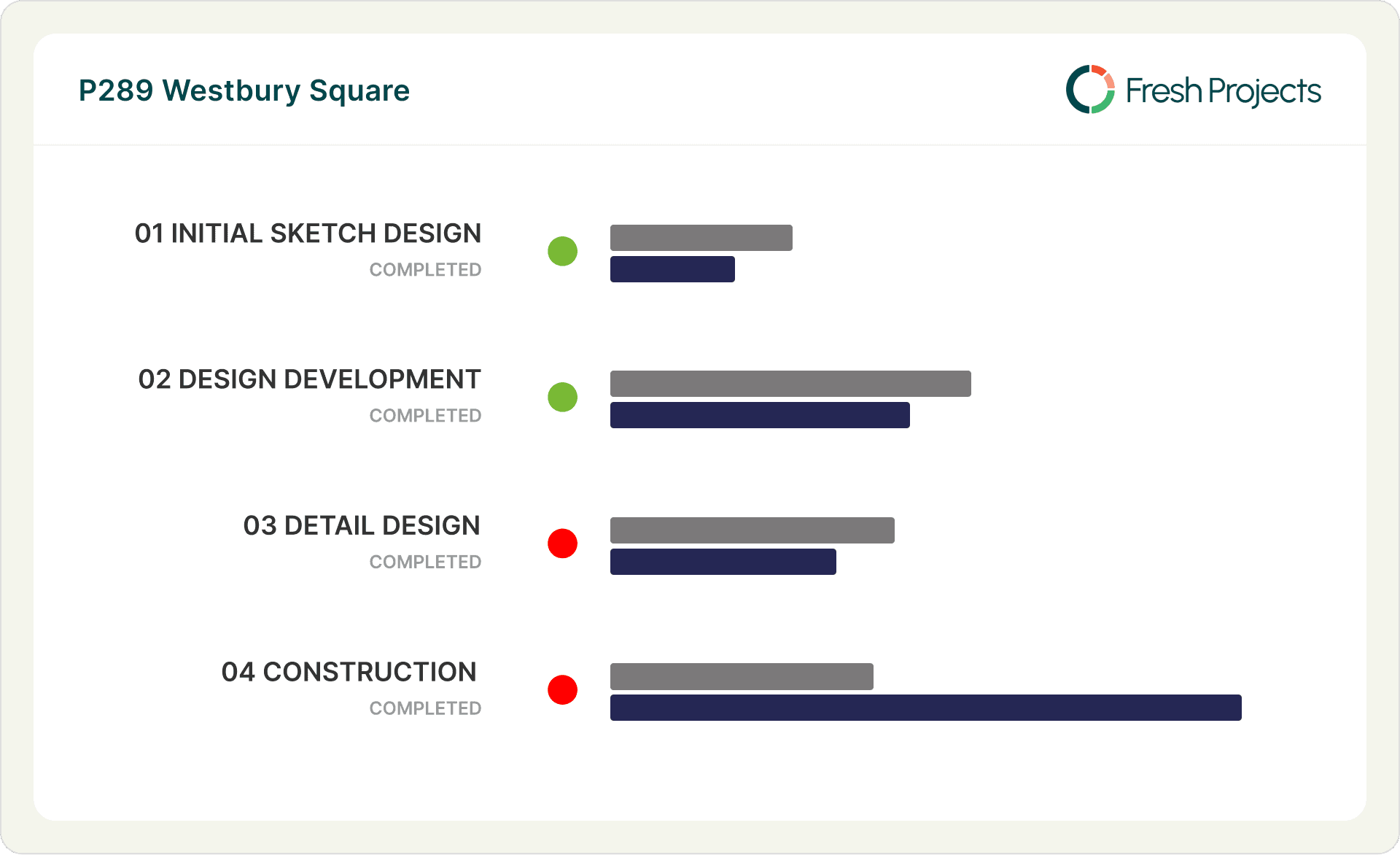
Most architecture and engineering projects are profitable during early design stages, and lose money during construction.
The main cause is unmanaged scope creep.
As projects progress, additional requests accumulate. Individually they feel minor. Collectively they wipe out margin.
How to manage scope creep in larger A&E firms
Managing scope creep requires visibility and cultural alignment.
Effective practices do three things consistently:
Share the agreed scope with the whole team
Everyone working on the project should understand what was signed with the client.Train teams to recognise out-of-scope requests
Staff at all levels should feel confident identifying variations and understand how unmanaged scope impacts profitability and ultimately salaries.Track additional work separately
Time and costs for variations should be recorded independently from core services. This creates evidence-based conversations with clients about additional fees.
The result is not only better profitability, but clearer, more professional client relationships.
Fees, profitability and cash flow are connected
Even when fees are set correctly and scope is well managed, practices can still run into trouble if invoicing is delayed or debt is poorly controlled.
Profitability only matters if cash actually reaches the bank.
That final piece, invoicing early and collecting debt quickly, is the subject of the next article in this series.
How Fresh Projects supports fee control and profitability
Fresh Projects is built specifically for architecture and engineering practices.
It connects:
So teams can see early when fees are at risk, scope is drifting or margins are eroding, and act before problems escalate.
Better visibility leads to better decisions, more confident fee setting and more predictable profitability.
Earlier in my career, I worked in the finance team of a large architecture and engineering firm. We had more than twenty people running accounting functions alone.
Despite that scale, the firms that performed best focused on just three fundamentals:
Winning the right jobs
Making sure project fees covered delivery costs
Invoicing early and collecting debt quickly
This article focuses on the second, because even well-run practices quietly lose profit when fees are set without sufficient rigour or scope changes go unmanaged.
Why getting project fees right becomes harder as firms grow
In 50–100 person architecture and engineering practices, fee pressure increases as projects become more complex, teams grow larger and delivery spans multiple stages and offices.
Two issues consistently undermine profitability:
Underestimating the true cost of delivery
Failing to charge for scope changes
Neither is caused by bad intent. Architects and engineers are problem-solvers by nature. We would rather move on to design work than pause to revisit budgets or challenge scope creep.
But profitability improves dramatically when firms build consistent habits around project budgeting and scope control.
What a profitable project fee actually requires
There are only two areas that truly matter when setting fees in an architecture or engineering practice:
1. Accurate project budgeting
At a minimum, you must understand what a project will cost to deliver and ensure the fee exceeds that cost.
2. Disciplined scope tracking
Scope creep is the single biggest eroder of profit in built environment professional services firms.
Getting either wrong can turn a busy practice into an unprofitable one.
Bottom-up costing: the foundation of profitable fees
Before accepting any project, firms should run a structured go / no-go process that includes scope definition and cost budgeting.
A practical approach looks like this.
Step 1: Understand the value you’re providing
Start by clarifying the problem you are solving for the client and the value you create. Where possible, quantify that value in financial terms.
This anchors the fee discussion in outcomes, not just hours.
Step 2: Define the scope of services clearly
Be explicit about what is included and just as importantly, what is excluded.
Many practices use a standard services checklist as a starting point, such as the RIBA Standard Services, adapting it to suit different project types.
Step 3: Estimate the true cost of delivery
This should include:
Labour costs:
Estimated hours per role multiplied by fully loaded cost rates, including overheads and non-productive timeOther costs:
Sub-consultants, travel, printing, surveys and specialist inputs
If delivery costs exceed the perceived value, the project should be reconsidered. These are often the jobs where clients feel overcharged and teams feel underpaid.
Step 4: Set a fee that covers costs, at a minimum
Profit should not be accidental. If a fee does not comfortably cover delivery costs, risk is being accepted knowingly.
Step 5: Sense-check the fee
Compare your proposed fee against:
Total construction cost benchmarks
Previous similar projects, and whether they were actually profitable
The value-add identified earlier
Industry averages can be helpful, but they should never replace firm-specific insight.
Step 6: Adjust scope, not price
If the client pushes back on fees, revisit scope. Removing services is far safer than discounting and hoping delivery comes in under budget.
Why scope creep destroys profitability during delivery
Across tens of thousands of projects, a consistent pattern emerges:
Most architecture and engineering projects are profitable during early design stages, and lose money during construction.
The main cause is unmanaged scope creep.
As projects progress, additional requests accumulate. Individually they feel minor. Collectively they wipe out margin.
How to manage scope creep in larger A&E firms
Managing scope creep requires visibility and cultural alignment.
Effective practices do three things consistently:
Share the agreed scope with the whole team
Everyone working on the project should understand what was signed with the client.Train teams to recognise out-of-scope requests
Staff at all levels should feel confident identifying variations and understand how unmanaged scope impacts profitability and ultimately salaries.Track additional work separately
Time and costs for variations should be recorded independently from core services. This creates evidence-based conversations with clients about additional fees.
The result is not only better profitability, but clearer, more professional client relationships.
Fees, profitability and cash flow are connected
Even when fees are set correctly and scope is well managed, practices can still run into trouble if invoicing is delayed or debt is poorly controlled.
Profitability only matters if cash actually reaches the bank.
That final piece, invoicing early and collecting debt quickly, is the subject of the next article in this series.
How Fresh Projects supports fee control and profitability
Fresh Projects is built specifically for architecture and engineering practices.
It connects:
So teams can see early when fees are at risk, scope is drifting or margins are eroding, and act before problems escalate.
Better visibility leads to better decisions, more confident fee setting and more predictable profitability.
Published:
Published:


Practice Performance Management & Project Information Management: Why Growing AEC Firms Need Both
Practice Performance Management & Project Information Management: Why Growing AEC Firms Need Both
Practice Performance Management & Project Information Management: Why Growing AEC Firms Need Both
Growing architecture and engineering firms need two kinds of visibility: how the practice is performing, and what the project knows. This piece explores why both matter as teams, projects and complexity grow.
Growing architecture and engineering firms need two kinds of visibility: how the practice is performing, and what the project knows. This piece explores why both matter as teams, projects and complexity grow.

Five ways to build commercial confidence across your project teams
Five ways to build commercial confidence across your project teams
Five ways to build commercial confidence across your project teams
How architecture, engineering, quantity surveying and other built-environment firms can help project teams understand fees, time and performance without turning everyone into finance specialists.
How architecture, engineering, quantity surveying and other built-environment firms can help project teams understand fees, time and performance without turning everyone into finance specialists.

Can your project record stand up when it matters? 5 practical tests for AEC firms.
Can your project record stand up when it matters? 5 practical tests for AEC firms.
Can your project record stand up when it matters? 5 practical tests for AEC firms.
Five simple tests to uncover gaps in your project information before they become commercial, compliance or delivery risks.
Five simple tests to uncover gaps in your project information before they become commercial, compliance or delivery risks.

7 Signs Your A&E Practice Management Software Isn’t Fully Adopted
7 Signs Your A&E Practice Management Software Isn’t Fully Adopted
7 Signs Your A&E Practice Management Software Isn’t Fully Adopted
How growing A&E firms can close the gap between software implementation and whole-team commercial value
How growing A&E firms can close the gap between software implementation and whole-team commercial value

When Teams Stop Speaking The Same Operational Language
When Teams Stop Speaking The Same Operational Language
When Teams Stop Speaking The Same Operational Language
Why growing architecture practices often lose reporting confidence gradually, long before anyone formally identifies a systems problem.
Why growing architecture practices often lose reporting confidence gradually, long before anyone formally identifies a systems problem.

What It Really Means When a Client Recommends You
What It Really Means When a Client Recommends You
What It Really Means When a Client Recommends You
Why the built environment has always grown through trust, and what that means for the firms that do it well.
Why the built environment has always grown through trust, and what that means for the firms that do it well.
Why Reporting Leaves Firms Guessing
Why Reporting Leaves Firms Guessing
Why Reporting Leaves Firms Guessing
Inside many built environment firms, meetings meant for decisions quietly turn into debates about the numbers on the page.
Inside many built environment firms, meetings meant for decisions quietly turn into debates about the numbers on the page.

Why Multi-Office Firms Lack Visibility
Why Multi-Office Firms Lack Visibility
Why Multi-Office Firms Lack Visibility
In many built environment consultancies, reporting technically works. The challenge is that clarity often arrives after the moment when it would have influenced action.
In many built environment consultancies, reporting technically works. The challenge is that clarity often arrives after the moment when it would have influenced action.

Why Reporting Slows Firms Down
Why Reporting Slows Firms Down
Why Reporting Slows Firms Down
Even with reporting systems in place, many architecture, engineering and quantity surveying firms find that insight arrives too late to influence decisions during delivery.
Even with reporting systems in place, many architecture, engineering and quantity surveying firms find that insight arrives too late to influence decisions during delivery.

Compare A&E Management Tools
Compare A&E Management Tools
Compare A&E Management Tools
Choosing a practice management system is no longer about feature lists. This guide explains how architecture and engineering firms should compare tools in 2026, focusing on adoption, usability and decision-making rather than complexity.
Choosing a practice management system is no longer about feature lists. This guide explains how architecture and engineering firms should compare tools in 2026, focusing on adoption, usability and decision-making rather than complexity.


Spreadsheets in A&E Firms: What Works
Spreadsheets in A&E Firms: What Works
Spreadsheets in A&E Firms: What Works
A practical guide to using Excel and Sheets well, and knowing when to graduate to purpose-built systems without losing the flexibility you love.
A practical guide to using Excel and Sheets well, and knowing when to graduate to purpose-built systems without losing the flexibility you love.

Women in AEC at Fresh Projects
Women in AEC at Fresh Projects
Women in AEC at Fresh Projects
Why representation, visibility and better systems matter for the future of architecture and engineering
Why representation, visibility and better systems matter for the future of architecture and engineering

Architecture Leadership Challenges
Architecture Leadership Challenges
Architecture Leadership Challenges
How firm leaders can protect margin, prepare successors and modernise delivery without losing what made them successful
How firm leaders can protect margin, prepare successors and modernise delivery without losing what made them successful

5 Ways to Outgrow Spreadsheets Profitably
5 Ways to Outgrow Spreadsheets Profitably
5 Ways to Outgrow Spreadsheets Profitably
How architecture and engineering practices protect margin as teams and project complexity increase
How architecture and engineering practices protect margin as teams and project complexity increase

The Profitability Pyramid Explained
The Profitability Pyramid Explained
The Profitability Pyramid Explained
Understanding the real drivers of financial performance for medium and large practices over the past year
Understanding the real drivers of financial performance for medium and large practices over the past year

3 Lessons to Help You Run a More Profitable Practice
3 Lessons to Help You Run a More Profitable Practice
3 Lessons to Help You Run a More Profitable Practice
Practical insights from A&E leaders on spotting profit risks early, communicating value, and protecting margins
Practical insights from A&E leaders on spotting profit risks early, communicating value, and protecting margins

Embracing Neurodiversity in Architecture
Embracing Neurodiversity in Architecture
Embracing Neurodiversity in Architecture
How inclusive practice design can unlock creativity, innovation and operational clarity
How inclusive practice design can unlock creativity, innovation and operational clarity

Profitable Projects: Winning the Right Projects in AEC
Profitable Projects: Winning the Right Projects in AEC
Profitable Projects: Winning the Right Projects in AEC
How to qualify leads, focus your pipeline and forecast success more confidently
How to qualify leads, focus your pipeline and forecast success more confidently

Profitable Projects: The Art of Cashflow Alchemy in AEC
Profitable Projects: The Art of Cashflow Alchemy in AEC
Profitable Projects: The Art of Cashflow Alchemy in AEC
How architecture and engineering firms can turn unpredictable cash flow into a strategic advantage
How architecture and engineering firms can turn unpredictable cash flow into a strategic advantage

Setting Fees for Profitable Projects
Setting Fees for Profitable Projects
Setting Fees for Profitable Projects
Why bottom-up fee setting, clear scope and real-time cost visibility underpin profitable projects
Why bottom-up fee setting, clear scope and real-time cost visibility underpin profitable projects

Tools That Improve A&E Profitability
Tools That Improve A&E Profitability
Tools That Improve A&E Profitability
Why better visibility across projects, people and finances is now essential for sustainable practice performance
Why better visibility across projects, people and finances is now essential for sustainable practice performance

How to Manage Inflation on Architecture Projects
How to Manage Inflation on Architecture Projects
How to Manage Inflation on Architecture Projects
Practical ways to protect fees and margins when costs change mid-project
Practical ways to protect fees and margins when costs change mid-project

An Architect’s Guide to Project Budgeting
An Architect’s Guide to Project Budgeting
An Architect’s Guide to Project Budgeting
How to build realistic, profitable project budgets that support better pricing and delivery
How to build realistic, profitable project budgets that support better pricing and delivery


Improve Project Profitability: An Architect’s Guide
Improve Project Profitability: An Architect’s Guide
Improve Project Profitability: An Architect’s Guide
Practical ways architecture practices can protect margins and make better commercial decisions
Practical ways architecture practices can protect margins and make better commercial decisions


Calculate Your Cost Rate in 3 Simple Steps
Calculate Your Cost Rate in 3 Simple Steps
Calculate Your Cost Rate in 3 Simple Steps
Why understanding your true cost rate is the foundation of profitable fees, resourcing and decision-making
Why understanding your true cost rate is the foundation of profitable fees, resourcing and decision-making

When to Hire: Key Decisions
When to Hire: Key Decisions
When to Hire: Key Decisions
Why workload visibility and forecasting matter more than instinct in mid-sized architecture practices
Why workload visibility and forecasting matter more than instinct in mid-sized architecture practices

5 Basics to Improve Profitability
5 Basics to Improve Profitability
5 Basics to Improve Profitability
Five practical habits that help architecture practices improve profitability without adding complexity
Five practical habits that help architecture practices improve profitability without adding complexity

3 Questions for Profitable Firms
3 Questions for Profitable Firms
3 Questions for Profitable Firms
How clear insight into projects, clients and utilisation drives better decisions in mid-sized A&E firms
How clear insight into projects, clients and utilisation drives better decisions in mid-sized A&E firms

What Makes Firms More Profitable?
What Makes Firms More Profitable?
What Makes Firms More Profitable?
Why the most profitable firms spend less time on financial management and still make better decisions
Why the most profitable firms spend less time on financial management and still make better decisions

A-Team Approach to Profitability
A-Team Approach to Profitability
A-Team Approach to Profitability
Why reallocating work across roles can dramatically improve utilisation and margins in 50–100 person A&E practices
Why reallocating work across roles can dramatically improve utilisation and margins in 50–100 person A&E practices

I Love Excel. I Hate Excel.
I Love Excel. I Hate Excel.
I Love Excel. I Hate Excel.
Why spreadsheets break down in 50–100 person architecture and engineering practices, and what works better
Why spreadsheets break down in 50–100 person architecture and engineering practices, and what works better
Getting Project Fees Right
Getting Project Fees Right
Getting Project Fees Right
How accurate budgeting and disciplined scope control protect profitability in 50–100 person A&E practices
How accurate budgeting and disciplined scope control protect profitability in 50–100 person A&E practices

Working Capital Risks in A&E Firms
Working Capital Risks in A&E Firms
Working Capital Risks in A&E Firms
The financial blind spot that catches even well-run architecture and engineering practices
The financial blind spot that catches even well-run architecture and engineering practices

We Run Our Business on Referrals
Fresh Projects is a UK-based software platform designed for architects, engineers, and other built-environment professionals to manage financial aspects of their projects. It helps teams track fees, timesheets, expenses, billing, and overall profitability to keep projects on budget and profitable. The platform also centralises project data, streamlines administrative tasks, and offers mobile app support for easy access and updates.
1a Colinette Road
London
SW15 6QG
© 2026 Fresh Projects
Product
